Showing posts with label harmful algal bloom. Show all posts

Tuesday, December 31, 2013

The Massive Algal Blooms In The Gulf Of Oman Are Stunningly Beautiful From Spac e


http://www.businessinsider.com/massive-algal-blooms-in-the-gulf-of-oman-2013-12?IR=T

The Massive Algal Blooms In The Gulf Of Oman Are Stunningly Beautiful From Space

Several of the world's largest desalination plants sit along the coast of the United Arab Emirates. Every year, they deliver 115 billion gallons of potable water to more than 550,000 people in Dubai alone. But the plants have had to slow or shut down production more frequently over the past decade because of an unexpected disturbance: massive algal blooms in the Gulf of Oman and the Persian Gulf.
The algae, known as red tide, clog pipes and filters at the plants. For warning of an approaching bloom, local authorities now consult data from a European Space Agency project, which began in 2012. When a passing satellite captures an image of an algal bloom (and software scans for the algae's chlorophyll, represented by the intensity of redness), officials alert plant managers, who then have a few days to decide how to adjust water production.

Friday, May 10, 2013

Huge toxic algae bloom expected for Lake Erie


http://www.cbc.ca/news/technology/story/2013/04/29/wdr-algae-bloom-predicted-lake-erie.html

Huge toxic algae bloom expected for Lake Erie

Scientists are warning that conditions are perfect for a bumper crop of algae to grow in Lake Erie this summer.


They say heavy April showers are washing fertilizer off farm fields into the water in larger amounts, and those chemicals feed algae blooms that starve the lake of oxygen. Feeding on phosphorus, algae produces bad smells and toxins that are absorbed by underwater life, choking it off.

"There's a 99 per cent chance, there's a strong chance, that [we will] have very bad algae this year," said Raj Bejankiwar, a scientist with the International Joint Commission.

The warning comes two years after Lake Erie experienced the worst algae blooms on record.

By the numbers

Approximately 40 million people live around the Great Lakes.
About 73 million tourists visited the Great Lakes in Ontario in 2010.
About $12.3 billion was injected into the economy by those tourists.
Source: IJC

Blooms are traditionally confined to the summer months, mainly August. Last year, however, warmer temperatures in March allowed algae to grow earlier in the year, but the bloom wasn't as big as the one witnessed in 2011.

This year, April rain could cause as big a bloom as the one from two years ago. Heavy spring rain was to partially blame for that one, too.

Phosphorus gets from the fields to the lakes in one of three ways:

Blown there by the wind.
Soaking through the soil, entering the ground water and flowing into rivers and lakes.
Rain washes it off the top of the soil and directly into rivers and lakes.

Bejankiwar is the lead on the Lake Erie Ecosystem Priority, a branch of the IJC that is studying algae levels in Lake Erie. He said it's normal to have some algae in the lake, but not massive blooms.
Bejankiwar said extra nutrients that feed algae also come from sewage treatment plants, recreational properties and golf courses. He said most of the phosphorus comes from farm run-off.

It's not much phosphorus per farm or per hectare, but it adds up, says one professor.
"If we're talking about the amount a farmer would lose, we're talking less than a few grams per hectare," said Ivan O'Halloran, a professor at Ridgetown College.
O'Halloran said that one kg of phosphorus run-off can have a "significant impact" on algae levels.

'No fertilizer police'
He said one way farmers try to decrease the amount of phosphorus that ends up in the lakes is to make sure they only put what they need into the soil. Soil tests can be done to see how much fertilizer is necessary.

However, there are no "fertilizer police," and best management practices are not laws: they are suggestions, O'Halloran said. That all makes it hard to regulate the distribution of fertilizer.

Henry Denotter, a Kingsville farmer, plants ground cover in the fall to keep the fertilizer from washing into the ditch. After the wheat is harvested, Denotter plants beets and clover in his wheat field to keep the soil in place. Even then, some phosphorus always escapes, he said.
"We do whatever we can to try and retain it, but we have to stay in business, too," Denotter said.
Denotter said it's impossible to keep all the fertilizer in the soil and dire predictions from scientists won't change that.
He thinks scientists should recognize there is only so much farmers can do.
Denotter already uses GPS to determine where he needs to fertilize; uses soil tests to determine how much fertilizer he needs; and uses what he calls a "no-till" system, where he doesn't turn up the earth.
Denotter said it's in farmers' best interest to do what they can to keep the phosphorus in the soil because it costs about $700 per tonne.

Last fall, the Essex Region Conservation Authority and Windsor-Essex County Environment Committee launched an educational campaign about blue-green algae. It's called Overload: Lake Erie Blue Green Algae.

Monday, April 22, 2013

Algae and fish farm link prospects on global science agenda


http://www.stuff.co.nz/marlborough-express/news/8580137/Algae-and-fish-farm-link-prospects-on-global-science-agenda
Algae and fish farm link prospects on global science agenda

PENNY WARDLE

Some of the best scientific minds in the world will this week focus on exploring any potential link between harmful algal blooms and fish farms.

The issue has been put on the agenda of an international algal bloom conference in Paris by senior scientist Lincoln MacKenzie, from Nelson research organisation Cawthron, who described it as a high priority.
His call comes as a toxic algal bloom has frozen the shellfish industry in Queen Charlotte Sound and in Tory Channel, where New Zealand King Salmon operates its Clay Point and Te Pangu Bay fish farms.
The scientists attending the Paris conference are part of the Geohab programme supported by the United Nations Educational, Scientific and Cultural Organisation (Unesco).
On March 23, the Nelson Marlborough District Health Board warned against eating kina, mussels, pipi, tuatua, oysters and cockles harvested from Queen Charlotte Sound and Tory Channel.
Mussel companies voluntarily stopped harvesting in these areas from March 11.
The blooms have no effect on fish, including farmed salmon.
The Alexandrium catenella algae causing the problem was first found at the head of Opua Bay two or three years ago. However, Mr MacKenzie confirmed cysts had been present in sediment on the sea floor for at least 10 years and possibly a lot longer.
Opponents of New Zealand King Salmon's plans to build new fish farms in the Marlborough Sounds argued at an EPA hearing in Blenheim last year that waste from fish farms could increase the frequency and extent of algal blooms.
However, Mr MacKenzie said nothing he had seen suggested a connection between salmon farms and the the algal bloom in Tory Channel. The major source of nutrition for algae was natural oceanic nitrogen.
He went on to say nitrogen levels in the sea were similar from year to year but this toxic bloom was new.People tended to link harmful blooms and fish farming but in most cases he knew of, good evidence did not exist, Mr MacKenzie said.
Cawthron was asking for scientists around the world to work together on the issue because a better understanding of fish farm impacts on water quality and biology would help minimise effects on the environment.

Monday, December 10, 2012

Global change and the future of harmful algal blooms in the ocean

http://www.int-res.com/articles/theme/m470p207.pdf


MARINE ECOLOGY PROGRESS SERIES
Mar Ecol Prog Ser


Vol. 470: 207–233, 2012
doi: 10.3354/meps10047
Published December 6, 2012


Global change and the future of harmful algal blooms in the ocean


Fei Xue Fu*, Avery O. Tatters, David A. Hutchins

*The University of Southern California, Department of Biological Sciences, 3616 Trousdale Parkway, Los Angeles, California 90089, USA

ABSTRACT: The frequency and intensity of harmful algal blooms (HABs) and phytoplankton
community shifts toward toxic species have increased worldwide. Although most research has
focused on eutrophication as the cause of this trend, many other global- and regional-scale
anthropogenic influences may also play a role. Ocean acidification (high pCO2/low pH), greenhouse
warming, shifts in nutrient availability, ratios, and speciation, changing exposure to solar
irradiance, and altered salinity all have the potential to profoundly affect the growth and toxicity
of these phytoplankton. Except for ocean acidification, the effects of these individual factors on
harmful algae have been studied extensively. In this review, we summarize our understanding of
the influence of each of these single factors on the physiological properties of important marine
HAB groups. We then examine the much more limited literature on how rising CO2 together with
these other concurrent environmental changes may affect these organisms, including what is possibly
the most critical property of many species: toxin production. New work with several diatom
and dinoflagellate species suggests that ocean acidification combined with nutrient limitation or
temperature changes may dramatically increase the toxicity of some harmful groups. This observation
underscores the need for more in-depth consideration of poorly understood interactions
between multiple global change variables on HAB physiology and ecology. A key limitation of
global change experiments is that they typically span only a few algal generations, making it
difficult to predict whether they reflect likely future decadal- or century-scale trends. We conclude
by calling for thoughtfully designed experiments and observations that include adequate
consideration of complex multivariate interactive effects on the long-term responses of HABs to a
rapidly changing future marine environment.

KEY WORDS: Climate change · CO2 · Ocean acidification · Temperature · Stratification · Nutrient
limitation · HAB · Algal toxins · Phycotoxins


Friday, February 17, 2012

Pretreatment of water for RO Plants

http://www.desalination.com/wdr/48/6/algal-blooms-not-created-equal

Algal blooms not created equal

Since the first commercial seawater RO plant was installed in 1974, pretreatment has been the single biggest variable in determining an installation’s success. More than 3,200 SWRO plants are now producing almost 24 million m3/d (6.3 billion GPD) of fresh water, and of all the pretreatment issues, the ability to effectively deal with harmful algal blooms (HABs) remains the most challenging.

Last week, at an expert workshop entitled Red Tides and Harmful Algal Blooms (HAB): Impact on Desalination Plants, public and private sector organizations met in Muscat, Oman to share information and work towards developing a better understanding of HABs. The event was jointly organized by the Middle East Desalination Research Center (MEDRC), Australia’s National Centre of Excellence in Desalination (NCED) and King Abdullah University of Science and Technology (KAUST). The event was held under the patronage of HE Mohammed Al Mahrouqi, Chairman of Oman’s Public Authority for Electricity & Water.

HABs refer to fast-growing algal blooms that make toxic chemical byproducts that can concentrate in the tissues of fish or shellfish. Animals and humans who eat the shellfish may become sick or suffer severe respiratory problems including paralytic shellfish poisoning (PSP).

Certain phytoplankton species contain reddish pigments; when they bloom, the water often appears to be colored red, hence the term ‘red tide’. However, scientists prefer referring to the blooms as HABs and consider the term ‘red tide’ to be a misnomer because the events are not associated with tides and because the phytoplankton species that are harmful may never reach the densities required to discolor the water.

Don Anderson, a senior scientist at Woods Hole Oceanographic Institution, told the workshop attendees that HABs are an expanding threat to public and ecosystem health and coastal aesthetics worldwide. “HABs are diverse phenomena, caused by many different species, producing different toxins and other compounds, in different hydrographic environments. Methods that might mitigate the impacts of one type of HAB may not work for others. The threat from HABs to desalination plants is real, and deserves attention through targeted research,” said Dr Anderson.

HABs have caused several well-publicized desal plant shutdowns in Oman since 2008. Dr Hamed Al Gheilani, with Oman’s Marine Science and Fisheries Center, and Dr. Hamad Al Hasni, with Oman PAEW, outlined the impacts of those events and described the monitoring program initiated to help predict future events and mitigate their impacts on desalination plants.

The workshop concluded with the attendees dividing into three groups to prepare recommended research topics.

According to MEDRC deputy director Shannon McCarthy, “The workshop resulted in some very specific recommendations for research projects that will help identify the onset of HAB events and to develop methods to mitigate their impact on desalination plant performance and water quality. Over the next few weeks, MEDRC, NCED and KAUST will consolidate those recommendations and determine how selected projects might be funded. We have also already begun planning a follow-up event to build on what has been learned at last week’s workshop.”

Friday, July 29, 2011

Despite bit of a stench, Franklin's water is harmless


Despite bit of a stench, Franklin's water is harmless


Until cooler temperatures or more rainfall come this way, the distinct odor of the drinking water coming from some taps in Williamson County and elsewhere will probably linger.

Officials with the county’s primary water supplier, the Harpeth Valley Utilities District, say the mix of lower water levels in the Cumberland River, scarce rainfall and extended hot temperatures of 95-100 degrees have spurred algae blooms in the water.

Those algae blooms create compounds — known as geosmin and 2-methyl isoborneol or MIB — that have left many wrinkling their noses and smarting from the water’s taste, despite increased water treatment.

Ultimately, water management officials say the treated tap water is safe to drink. But if you feel like the smell is more prevalent and the problem more widespread than in summers past, you aren’t alone.

“This year appears to be worse than usual, as of right now,” said John Barnes, assistant general manager of the utility district.

Reports of foul-smelling water come from as far away as Nashville, Hendersonville and cities in Rutherford County.

“It’s really everybody who has surface water,” said Franklin City Administrator Eric Stuckey. “It’s really everybody.”

Much of Williamson County’s water comes from the Cumberland River. Water is pumped here by Harpeth Valley for use by cities and other utility districts. In addition to buying water from HVUD, the city of Franklin pumps some of its drinking water from the Harpeth River and treats it at its Franklin water plant.

In Franklin, water department staffers have been furiously flushing water lines to get rid of the foul-smelling water. More than 200 hydrants have been flushed since the problem surfaced last week, city officials said, and staffers worked more than 122 hours of overtime.

At first, the problem seemed heaviest in southern parts of the cities, but reports of foul-smelling water have spread.

City spokeswoman Milissa Reierson said crews are focusing on hydrants located on dead-end lines, as those seem to be having the most difficulties.

Stuckey said he feels like the problem has lessened somewhat in recent days.

“I don’t know when it will completely resolve,” Stuckey said. “Rain helps. Lower temperature helps.”

To help improve the water’s taste at home, Barnes recommends chilling the drinking water, which might decrease the smell, or using a carbon filter for drinking water, which should improve the odor and taste.

“There shouldn’t be any concern about the safety of the water,” Barnes said.

Contact Kevin Walters at 615-771-5472 orkewalters@tennessean.com

Monday, May 9, 2011

Harmful Algal Blooms


The number of harmful algal blooms has increased over the last 40 years, especially in regions with large increases in coastal populations and over fishing.

Tuesday, April 19, 2011

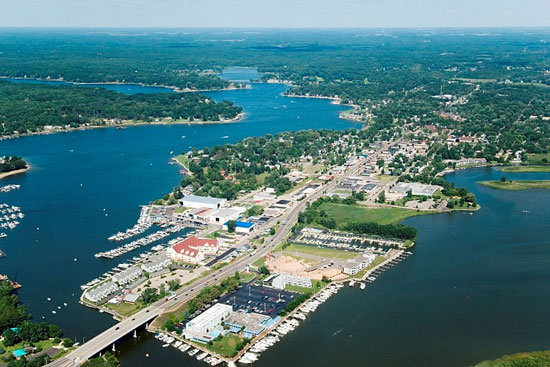
Spring Lake - HAB - Alum


Spring Lake waterfront community optimistic for alum’s prolonged progress

Village of Spring Lake

Village of Spring Lake

Spring Lake, Mich. residents are pleased with the continued results of an aluminum sulfate, or alum, treatment on Spring Lake. For years, the lake was plagued with algal blooms, rendering the water unusable for recreation. Whilealgal blooms manifest naturally and possibly seasonally contingent on weather and water condition, their growth can be provoked by human activity such as industrial and agricultural waste drainage as well as natural factors like temperature and water traits.

High numbers of algal bloom result in lower levels of dissolved oxygen and death of aquatic plant and animal life. Spring Lake is extremely eutrophic and has high percentages of nutrient cycling, which caused prevalent algal blooms to appear in summer months. However, a Grand Valley State University studyconducted in 2010 has confirmed water quality in the lake has improved tremendously.

Six years ago, the Spring Lake Board devised a multipart plan to improve and watch over the lake’s water quality for a decade. The project included treating the lake with aluminum sulfate. Before treatment, Spring Lake’s phosphorous levels were approximately 325 parts per billion. In 2005, nearly 1.2 million gallons of alum were sprayed over deep sections of the lake.

Alan Steinman, director of GVSU’s Water Resources Institute, said the 2010 study measured the 2005 phosphorus levels against 2010 levels, and he found they had plummeted to less than 30 parts per billion. Although phosphorus levels have increased somewhat, Steinman is optimistic.

“…It is still significantly lower than 2003. I was very pleased by the continued effectiveness of the alum,” he said.

Steinman is not the only one pleased with the results. Bruce Kennedy, a Spring Lake resident, remembers the condition of the lake prior to treatment.

“The algae blooms we experienced in the past were like pea soup,” he said, adding that he thought the alum treatment has worked well.

Although the treatment has been largely successful, Steinman warned against treating the alum as a cure-all. The alum deals with the effects of the problem rather than the problem itself, he said. It attaches itself to the phosphorus, removing it from the water and pulling it into the sediments at the bottom of the lake.

“The alum treatment has been effective five years later,” he said. “But it is impossible to say how much longer it is going to last.”

Spring Lake waterfront residents hope for continued success from chemical treatment [Muskegon Chronicle]
Spring Lake Phosphorus Project-Project Information [Annis Water Resources Institute]
Algal blooms in fresh water [Water Encyclopedia]
The Reduction of Internal Phosphorus Loading Using alum in Spring Lake, Michigan [Wetland Biogeochemistry Laboratory, University of Florida]

Image Credit: http://www.springlakevillage.org/

-----------------------------------------------------------------------

Alum only deals with the symptom and not the problem.

The quantity used is very large - 1.2 Million gallons.

Alluminium may accumulate and become toxic

(if Copper sulfate were to be used as an Algaecide, copper would accumulate)


Monday, December 20, 2010

Boom in harmful algal blooms


Boom in harmful algal blooms

Harmful algal blooms (HAB), lethal for human beings and marine ecosystems alike, are steadily increasing in intensity in the Indian waters. Researchers have found out that the toxic blooms had increased by around 15 per cent over the last 12 years in Indian seas.

There were 80 harmful blooms between 1998 and 2010 in the Indian seas against the 38 that took place between 1958 and 1997. The number of such blooms was just 12 between 1917 and 1957, according to scientists.

These findings form part of the research data that was generated by a team of marine life experts, including K.B. Padmakumar and V. N. Sanjeevan of the Centre for Marine Living Resources and Ecology, Kochi and N.R. Menon of the Cochin University of Science and Technology, as part of a national programme of the Centre.

Monitoring

The researchers had monitored the harmful blooms and tried to identify the factors causing the bloom, dynamics of bloom formation, spread and its ecological consequences on marine ecosystems. The potentially toxic micro algae recorded from the Indian waters included Alexandrium, Gymnodinium, Dinophysis, Coolia monotis, Prorocentrum lima and Pseudo-nitzschia.

Toxic blooms have been reported from over 30 countries, including India. The first recorded observation on algal blooms in India was in 1908.

Lethal

The blooms turn lethal for human beings when they consume marine organisms that feed on such algae. Incidents of paralytic shell fish poisoning, following an algal bloom, was reported in 1981 from Tamil Nadu, Karnataka and Maharashtra. Three persons lost their lives and 85 were hospitalised in Tamil Nadu.

In a similar incident at Vizhinjam in Kerala in 1997, seven persons died and around 500 were hospitalised. These people had consumed a mussel, which had fed on toxic algae. Another bloom that hit Kerala in 2004 resulted in nauseating smell emanating from the coastal waters extending from Kollam to Vizhinjam. More than 200 persons suffered from nausea and breathlessness for short duration due to the foul smell. The bloom also resulted in massive death in the region, scientists said.

Scientists had collected algal samples from 1,880 stations during the last 12 years as part of the study. They had also recorded the presence of 422 species of micro algae, including 35 harmful ones. Noctiluca scintillans was the dominant and frequently occurring algae during summer monsoon. While Cochlodinium, Gymnodinium, Gonyaulax and Ceratium bloomed frequently, blooming was an annual affair for Trichodesmium. However, the Noctiluca bloomed at intervals.

It was the Arabian Sea that experienced the most number of blooms over the decades. The Bay of Bengal recorded blooms by and large during the northeast monsoon when cyclonic storms occurred in the region. Global warming and the resultant storminess could also influence the frequency of bloom formation in the Indian seas, scientists said.

Causative factors

Upwelling, formation of mud banks, nutrient discharges from estuaries and run-off from the land during southwest and northeast monsoons cause some algae blooms in coastal waters.

The changing patterns of nutrient ratio of the coastal and the open ocean waters due to anthropogenic activities, increased aquaculture operations leading to enrichment of coastal waters, dispersal of toxic species through currents, storms, ship ballast waters and shell fish seeding activities were some of the factors triggering the blooms, they said.


Tuesday, July 13, 2010

Blue Green Algae blooms worldwide


Smelly water coming from some taps

By Colin McDonald - Express-News
Web Posted: 07/12/2010 9:11 CDT

An algae bloom in Canyon Lake has caused stinky water to come from faucets across San Antonio's North and far Northwest sides.


Blue-green algae in Rock County

Posted: Jul 13, 2010 8:01 PM IST

JANESVILLE (WKOW) -- Rock County Health Department officials say they've found blue-green algae in Clear Lake. Officials say it could develop in other recreational waters as warmer weather sets in

http://bsanna-news.ukrinform.ua/newsitem.php?id=13578&lang=en

Spills in Black Sea near Odesa turned to be blue-green algae

KYIV, July 13. /UKRINFORM/. Spills revealed in the Black Sea's Odesa gulf are nothing but blue-green algae, say experts with the Ukrainian Institute of South Seas Biology. An anomalous algal bloom is presently seen there.

However, the experts say the concentration of blue-green algae (Nodularia spumigena) in one liter of water is extremely high. Moreover, this type of algae in the Odesa gulf can be found quite rarely.

http://www.krugerpark.co.za/krugerpark-times-e-5-is-kamfers-dam-brink-of-collapse-25217.html

A recent water quality study, conducted by Dr Jan Roos from Water Quality Consultants in Bloemfontein, has found that Kamfers Dam’s water quality has deteriorated significantly during the past year. “The Kamfers Dam aquatic system is under severe pressure because of a massive cyanobacterial (algal) bloom and extreme oscillations in oxygen concentrations, driven by poor water quality”, said Dr Roos.

-----------------------------------------

US, Black sea, South Africa, the news is the same worldwide.

Water pollution is leading to more and more blue green algal blooms.

Diatoms are the best way to control these blooms.


Thursday, April 15, 2010

Manage cyanobacterial blooms using adapted Bacillus cereus

http://www.soley.cn/controlling-algae.html

Controlling Algal Bloom

Exact and permanent solution for toxic algal-bloom by organic way.

Manage cyanobacterial blooms easily by using adapted Bacillus cereus without any environmental damage.

Adapted Bacillus cereus is capable of lysing cyanobacterial cells.
Bacillius cereus produce nontoxic substances for against microalgae microcystis.

Required strain for each 1 m3 water - 0,02ml

1800 USD per 100 ml
-------------------------------------------
Thus cost for 1 million liters is $ 360.

Nualgi required for 1 million liters is 1 kg - $ 10.

Bacillus cereus only kills the cyanobacteria and will not deal with the N and P in the water, hence the cyanobacteria may again bloom after a few weeks.

Diatoms will consume the N and P and hence is a permanent solution.

Monday, March 29, 2010

Harmful Algal blooms increasing and causing low DO levels

http://blog.cleantechies.com/2010/03/29/ocean-oxygen-catastrophic-change/

Lower Ocean Oxygen Levels Predict Catastrophic Change
Published on March 29th, 2010 by Celsias
Posted in Climate Change & Carbon Emissions, Pollution, Water Resources
Leave comment »

There is a cascade failure going on in the world’s oceans that promises nothing but trouble in the future, and the problem stems in part from agricultural practices developed over the last half-decade aimed at growing more food on the same amount of land to feed rising populations.

A cascade failure is the progressive collapse of an integral system. Many scientists also call them negative feedback loops, in that unfortunate situations reinforce one another, precipitating eventual and sometimes complete failure.

The agricultural practices relate to “factory farming,” in which farmers grow crops using more and more chemical fertilizers, specifically nitrogen and phosphorus, which are the first two ingredients (chemical symbols N and P) listed on any container or bag of fertilizer. The last is potassium, or K.

But farmers aren’t the only culprits. Lawn enthusiasts add to the problem with their massive applications of fertilizer designed to maintain a species of plant that doesn’t provide either food or habitat, and is grown merely to add prestige. And groundskeepers at parks and large corporate headquarters are equally guilty. In fact, a whole generation needs to rethink its addiction to lawns.

Whoever is guilty of applying the fertilizer, these megadoses are eventually washed off the fields and lawns and into waterways. From there, they migrate to the nearest large bodies of water, where they spark such tremendous and unnatural growth in aquatic plants that the result is eutrophication , or lack of oxygen in the water as bacteria act to reduce the sheer mass of dying organic matter.

One of these aquatic growths is algae, or phytoplankton. Moderate algal growth can produce higher fish yields and actually benefit lakes and oceans, but over-stimulation leads to a whole host of problems whose integral relationship to one another threatens not only aquatic but human life.

A classic example would be the Baltic Sea, where phytoplankton are raging out of control. The Baltic Sea is, as a result, home to seven out of ten of the world’s largest “dead zones,” aquatic areas where nothing survives.

One of the other three is the Gulf of Mexico, where a 2008 dead zone the size of Massachusetts is expected to grow in future years thanks to the U.S. government’s biofuel mandate. Most of the crops for biofuel are grown along the Mississippi River, which drains directly into this dead zone.

In the Baltic, as elsewhere, overfishing has exacerbated the problem. Fish feed on smaller aquatic organisms, which themselves feed on the algae. Take the fish out of the equation, and the balance is lost. It’s very much like removing the wolves that keep down the deer population in order to protect the sheep, and it doesn’t work in the ocean any better than it works on land.

Once the algal blooms begin to thrive, they block sunlight to deeper water and begin to kill off seaweeds and other aquatic plants which are home to fish species. The dying plants then consume more oxygen as bacteria consume them. And, as the seaweeds die, the few remaining fish and shellfish species move away, deprived of habitat.

This is a classic example of a negative feedback loop, and it is reinforced by every meal of fish, every instance of Scotts lawn fertilizer, and every ear of corn grown with a little help from Cargill or Dow, to name just two multinational fertilizer manufacturers.

Another example is occurring in the Pacific Northwest , along the West Coast of the United States, where — in Washington State, Oregon, and even Northern California — piles of Dungeness crab shells on the ocean floor mark areas of severe eutrophication well within sight of land.

Elsewhere along the Pacific shoreline, bird deaths – ranging from pelicans to sea ducks – predict a failure in the natural world that can’t help but reverberate among the planet’s prime predator, man.

These areas of eutrophication have always been present, but their spread – from one or two areas to miles of coastal waters – indicates a larger problem that is likely about to overwhelm not only the fishing industry and tourism but the existence of oceans as living entities.

As Oregon State University ocean sciences professor Jack Barth notes, the once-scarce areas of low oxygen have become the “new normal”, with old areas repeating and new areas cropping up every year. In many of these areas, oxygen levels are 30 percent lower than they were a mere half-decade ago.

Not all algal blooms are harmful or noxious, of course. But those which occur in response to eutrophication do seem to be, and these – known as HABs, or harmful algal blooms – include pseudo-nitzschia producing algae, which deliver a neurotoxin called domoic acid that can kill humans, birds and aquatic mammals that eat the affected shellfish; golden algae, which under certain conditions produce toxins that cause massive fish and bivalve (clams, mussels, oysters) kills; brown tides, which are not toxic in themselves but create aquatic conditions that can kill fish larvae; red tides, which produce brevetoxins that can affect breathing and sometimes trigger fatal, respiratory illnesses in humans; and blue-green algae, or cyanobacteria, which can form dense colonies that cause water to smell and become toxic to fish, pets and humans.

This last, which has spread from Texas to Minnesota, has led to livestock deaths in the former. In the latter, where having a lake home is a sign of prestige, many homeowners have been forced to sell at a loss to get away from once-pristine lakes so smelly and toxic that dozens of pet dogs have been killed drinking the water.

Lower oxygen levels in oceans are very attractive to one species; jellyfish, and these odd creatures with their many tentacles and poisonous sting thrive under such conditions. In fact, jellyfish have few predators except man, and those few (tuna, sharks, swordfish, a carnivorous coral , one species of Pacific salmon and the leatherback turtle) are all at great risk of extinction because of eutrophication and its related conditions, pollution, overfishing and climate change.

As one of the most prolific species in the ocean, and certainly one with a long history (the species has been around since the Cambrian), jellyfish will probably take over the oceans if things continue as they have been going since the 1960s. This is good news for the Japanese, Chinese and other Oriental cultures who regard the slimy beast as a delicacy.

For the rest of us, jellyfish are an acquired taste, and one we had better acquire if we want to keep eating seafood. Either that, or we can support legislation that, in the U.S. at least, promises some relief through research, monitoring and rule-making regarding the Great Lakes and both coasts.

Article by Jeanne Roberts appearing courtesy Celsias.
---------------------------------------------------

This article seems to contradict the NASA finding that Phytoplankton population is decreasing.
www.gsfc.nasa.gov/topstory/20020801plankton2.html

It also contradicts the old paper of 1958 by Prof Ryther that Diatom blooms cause high Dissolved Oxygen level.
http://www.jstor.org/stable/1539030

The truth is perhaps that Diatoms blooms have decreased and other algal blooms have increased. No one seems to be monitoring this change.

Usually Chlorophyll 'a' is measured, however, Chlorophyll a is present in all types of algae, so it is not an effective means to identify useful vs harmful algae.

Friday, November 13, 2009

Freshwater Harmful Algal Bloom

http://www.freshwaterhablegislation.com/

Welcome to www.FreshwaterHABLegislation.com

This website supports advancement of the proposed Freshwater Harmful Algal Bloom Research and Control Act (FHAB Act) in the 111th U.S. Congress. An informal coalition of freshwater researchers and managers, and other interested parties, is attempting to provide the public support needed by the U.S. Senate’s Environment & Public Works Committee (Sen. Barbara Boxer, chair) and the U.S. House of Representative’s Science & Technology Committee’s (Rep. Bart Gordon, Chair) Subcommittee on Energy and Environment (Rep. Brian Baird, Chair) for introduction and enactment of the FHAB Act. The coalition is led by Drs. H. Kenneth Hudnell and Wayne Carmichael.

Cyanobacteria (a.k.a. blue-green algae) are the predominant FHAB organisms. Their populations rapidly expand during appropriate conditions of nutrients, warmth, sunlight and quiescent or stagnant water. Dozens of cyanobacteria species produce some of the most potent toxins known. These toxins, cyanotoxins, cause lethal, sub-lethal and chronic effects in humans and other organisms. Cyanotoxins occur in finished drinking water, as well as in recreational waters. Bloom biomasses adversely impact aquatic biota, including massive fish kills caused by hypoxia and/or toxin secretions when the cells die and decay. There is widespread agreement among scientists and water quality managers that the incidence of blooms in freshwater bodies is increasing in the U.S. and worldwide. Every year FHABs occur where they were not observed previously, and FHAB durations increase. Global climate change, rising freshwater usage demand, excessive nutrient inputs to freshwater and poor water management practices are driving much of the increase. The economic costs of FHABs and eutrophication in U.S. freshwaters are conservatively estimated to be $2.2-4.6 billion annually.

The FHAB Act is needed to mandate that the U.S. Environmental Protection Agency (EPA) establish a National Freshwater Harmful Algal Blooms Research Plan (FHABRP) so that Federal policy can be developed. The EPA has purview over all U.S. freshwater bodies, but has not made regulatory determinations or established guidelines for FHABs due to the lack of sufficient scientific information on FHAB occurrence, dose-response health effects and control methodology. The Agency has not established the FHABRP because of the lack of a clear Congressional directive. The World Health Organization and a number of other countries have established regulations or guidelines. The FHAB Act is needed if we are to protect human health, aquatic ecosystems and the U.S. economy from the looming crisis posed by FHABs.

The EPA listed Microcystins, Cylindrospermopsin and Anatoxin-a as highest priority cyanotoxins, and Saxitoxin and Anatoxin-a(s) as medium to high priority. Research is needed to assess the frequency and concentrations with which cyanobacteria and these cyanotoxins occur in recreational and finished drinking waters. Health research is needed to obtain cyanotoxin dose-response data for establishing Reference Doses (ingested compounds), Reference Concentrations (inhaled compounds) and cancer assessments. Risk management research is needed to assess the efficacy and sustainability of ecological and chemical approaches to FHAB control. No Federal research funds currently target this research. The FHAB Act and subsequent fund allocations are needed to establish the FHABRP so the research can be accomplished.

Congress was informed of the need for the FHAB Act through testimony given to the Science & Technology Committee by Dr. Hudnell in July 2008. The FHAB Act is modeled after the Harmful Algal Bloom and Hypoxia Research and Control Act (1998, 2004) that directed the U.S. National Oceanographic and Atmospheric Administration (NOAA) to establish a research plan for coastal HABs. FHAB Act funds would be administered through the three competitive, research grant programs established by NOAA – ECOHAB, MERHAB & PCM HAB.

This website includes a repository of all Emails sent to coalition members and all letters drafted for submission to Congress. If you would like to join the FHAB legislation coalition, click on the Join Email List button above.

The website is hosted on a SolarBee, Inc. server where additional information on FHABs can be obtained in the Science Office section. For additional information, Email Dr. Hudnell.

Thank you for your support of the FHAB ACT.

Last updated June 1, 2009.

Friday, August 21, 2009

Canada's sickest Lake - Winnipeg

Algal Blooms

http://www2.macleans.ca/2009/08/20/canada’s-sickest-lake/

Globally, toxic algal blooms—in both lakes and coastal systems—have been increasing in number, frequency and size. A toxic bloom in the Yellow Sea at Qingdao nearly halted the sailing events at last summer’s Beijing Olympics. A year earlier, a rank toxic bloom choked legendary Lake Tai, China’s third-largest freshwater lake, leaving more than two million people without drinking water and killing fish. Meanwhile, a 7,770-sq.-km oxygen-starved “dead zone” has spread in the Gulf of Mexico where the Mississippi—chock full of fertilizers after draining the U.S. Midwest—spills into the ocean, causing an explosion of toxic algae and bacteria, killing fish and threatening the Gulf’s $2.8-billion fishery. Scientists say such zones are spreading, and could one day make up one-fifth of the world’s oceans.

-----------------------------------------------------------
Nualgi can stop harmful algal blooms.